How to Set Up a Commercial Bakery: Equipment Guide and Checklist
A practical walk-through of the planning decisions and core machinery you need before your first bake — from production capacity and equipment selection to layout, utilities and hygiene.
Planning Before You Buy Equipment
Before shortlisting a single machine, settle three questions: what you're producing (bread, buns, cookies, cakes, rusk — or a mix), how much you need to produce per day at launch, and how much headroom you want to build in for growth. Equipment sized for today's volume with no room to add a second shift or a second oven later often costs more to expand than if a growth allowance had been planned from the start.
It's also worth deciding early whether you want a single vendor to design, supply and install your whole line (a turnkey build) or whether you'll buy core machines now and add supporting equipment in phases — see Turnkey vs. Phased Build below.
Core Equipment by Production Stage
Most commercial bread and bakery lines need equipment at each of the stages below. Which specific machines and how many depends on your product mix and target output.
| Stage | What it does | RotoBake category |
|---|---|---|
| Dough processing | Portions, rounds and shapes dough between mixing and proofing | Dough Processing |
| Mixing | Develops dough, batter or cream mixes | Planetary Mixers · Spiral Mixers |
| Proofing | Final rise under controlled temperature and humidity | Proofers |
| Baking | Even, all-round baking of bread, buns, cookies, cakes and rusk | Rotary Rack Ovens |
| Cooling | Cools baked product before slicing or packing | Industrial Solutions — Cooling Systems |
| Slicing | Cuts baked loaves into uniform slices | Bread Slicers |
| Cookie & cake depositing | Automates depositing for biscuit, cookie and cake lines | Cookie & Cake |
| Finishing & packing support | Working tables, storage containers and trolleys | Accessories |
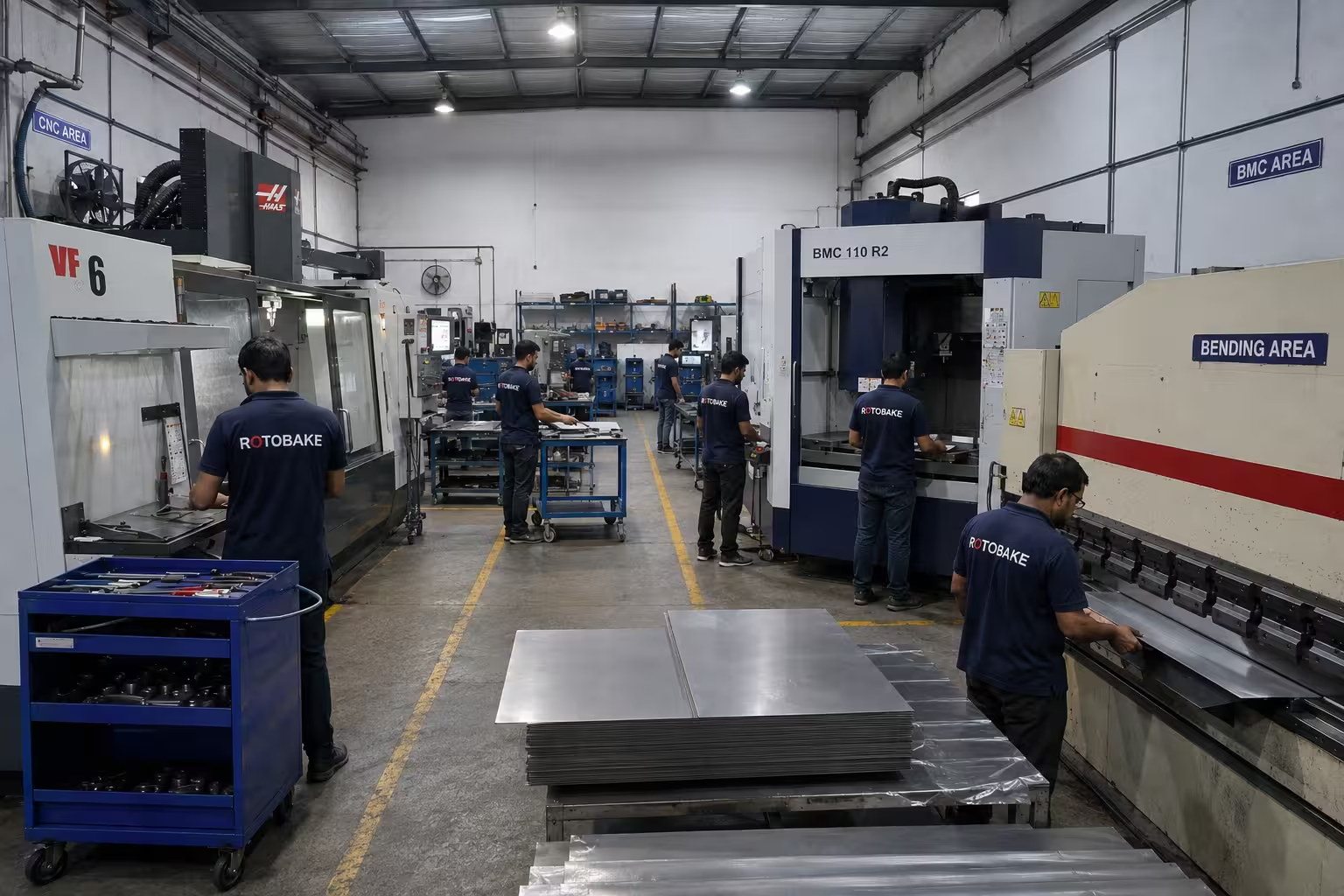
Turnkey vs. Phased Equipment Build
There are two common ways to approach a new bakery build:
Neither approach is universally "better" — a turnkey build suits buyers who want one point of accountability for the whole line; a phased build suits buyers who already know their layout and want to control cash flow. Talk to RotoBake about which fits your situation.
Workflow & Layout Considerations
A bakery floor plan generally flows in one direction to avoid raw and finished product crossing paths: raw material intake → mixing → dough processing → proofing → baking → cooling → slicing/finishing → packing → dispatch. Reversing or crisscrossing this flow tends to create congestion and makes hygiene zoning harder to enforce.
Every RotoBake product page publishes the machine's overall dimensions and weight in its technical specification table, so you can plan floor space and access routes around your actual shortlisted models rather than generic assumptions. Share your floor plan with RotoBake for a layout review before you commit to equipment.
Utilities Planning
- Power supply — most industrial bakery machines run on a three-phase supply; confirm the exact voltage and phase requirement on each machine's own specification sheet before finalising your electrical plan.
- Fuel type for baking — RotoBake rotary rack ovens are available in gas, diesel or electric versions depending on the model; choose based on what fuel is reliably available and costed at your site.
- Water & drainage — mixing and wash-down areas need a reliable water supply and floor drainage for cleaning.
- Ventilation — oven areas generate significant heat and combustion exhaust (for gas/diesel models) and need adequate ventilation and flue planning.
Hygiene & Maintenance Considerations
Food-contact bakery equipment should be built in food-grade steel with smooth, cleanable welds — this is the standard construction across RotoBake's mixer, proofer and dough-processing ranges. Beyond construction, plan for routine preventive maintenance and a spare-parts relationship with your supplier from day one, not after something breaks down. RotoBake's own manufacturing is carried out under ISO 9001:2015 quality management — see our certifications for the full list.
Planning for Capacity Expansion
Because RotoBake's rotary rack oven range spans 18 to 172 trays across nine models, many bakeries start with a mid-range oven and step up to a larger model — or add a second oven — as volume grows, rather than over-buying capacity on day one. The same logic applies to mixers and proofers: buy for your realistic 12–24 month volume, and confirm with RotoBake which models share a similar footprint so a future upgrade doesn't require re-planning your whole layout.
Equipment Selection Checklist
- What fuel types are reliably available at my site, and does that match the oven options I'm considering?
- Do I have the labour available to run manual/semi-automatic equipment, or do I need a higher automation level?
- What is the supplier's spare-parts availability and typical dispatch lead time?
- Does the supplier install and commission on site, or do I need to arrange that separately?
- Have I asked for a written quotation for my exact configuration? (RotoBake does not publish list prices online — contact us for a formal quote and lead time.)